| HEALTH JIGSAW | Call us now 0403-009-277 |

February 2011
For most of us, February is the month when everything returns to 'normal' - the summer holidays are over  and the kids are back at school
  . It's also time to really get focused on the new year's resolution(s) that you made last month.
In this month's newsletter:
-
Healthy school lunchbox.
-
Chia seeds.
-
The Biggest Loser.
-
Kayak day photos.
- How you can save money and lose weight.
Healthy School Lunchbox
| The latest statistics indicate that 23% of children aged two to 16 in Australia are overweight or obese and of these, 6% are obese. Being overweight as children sets them up for many health problems in the future, such as increased rates of type 2 diabetes, higher rates of cardiovascular and renal disease and more cancer, especially bowel cancer. Therefore, the start of another school year is a reminder that what the children eat at school is vitally important in order to beat those alarming statistics. | 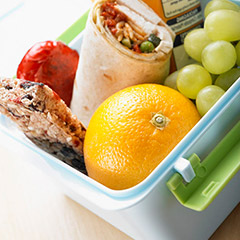 |
Children need to eat a good healthy breakfast before leaving for school. Avoid those cereals which really should belong in the confectionary section of the supermarket, such as Coco Pops, Fruit Loops and Milo.
Most experts agree that sandwiches or wraps make the healthiest lunches. Use wholegrain or wholemeal bread and fill the sandwiches with a protein filling such as chicken, tuna or other lean meats. Salad, either inside the sandwiches or on its own, and fruit should also be included in the lunchbox.
You should avoid packing sweetened drinks (cordial, soft drinks, juice poppers), packaged snack foods such as crisps and bars and anything fried in your children's lunchbox. Most pre-packaged foods (except dried fruit and unsalted nuts) at the supermarket aren't good for the children.
Also, the return to school coincides with some of the hottest time of the year so you will need to keep some foods cool in order to reduce the risk of food poisoning. You can use insulated lunch boxes or cooler bags and also putting a frozen drink or freezer brick inside the bag can keep the foods cool.
Chia Seeds
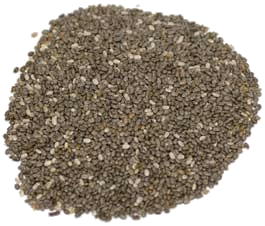 |
Chia seeds are one of nature’s superfoods – high in essential fatty acids, protein, soluble fibre, vitamins, minerals (calcium, iron, magnesium, phosphorus, potassium, zinc, boron, copper) and antioxidants. The protein is a complete protein, meaning it has all 8 essential amino acids which is very rare for a vegetarian source of protein. Chia seeds were first used as food as early as 3500 BC by the Aztecs and the Mayans in Central and South America. |
What’s so good about Chia?
-
It is a wholegrain food and research has shown that wholegrain foods can lead to better health, help lower the risk of being overweight and lower the risk of diet related disease such as diabetes and heart disease.
-
Chia contains 20% Omega 3. Research has shown Omega 3 ALA (alpha-linolenic acid) can be beneficial for lowering cholesterol, maintaining artery function, reducing the risk of cardiovascular disease (CVD) and important for brain function.
-
Chia contains 36% fibre of which 80% is insoluble and 20% soluble. Consuming soluble fibre helps to lower cholesterol in the body.
-
Chia contains very high levels of antioxidants. Oxidation in the human body produces chemicals called ‘free radicals’ and these chemicals have been linked to CVD. A diet high in antioxidants helps to neutralise these free radicals in the body which supports heart health.
A serve of 15 grams (1 level tablespoon) is recommended daily and chia can be sprinkled over salads, cereals and muesli or incorporated into breads, muffins, slices, cookies or porridge. When you mix the seeds into one cup of water, a gel is formed which can be added to smoothies, juices, yoghurts, salad dressings and soups.
Generally, chia is a very low allergenic seed and it’s gluten-free, making it suitable for coeliacs, lacto-ovo vegetarians, lacto vegetarians and vegans. However, some research indicates that you should consult a doctor prior to consuming chia if:
-
you have low blood pressure (chia can lower your blood pressure); or
-
you are taking blood thinners, planning surgery or on an aspirin regiments (chia can thin your blood); or
-
you are allergic to sesame or mustard seed (as you could possibly be allergic to chia as well).
Although the seeds were originally from Central and South America, the Kimberley region in Western Australia has become one of the world’s largest producers of Chia as it has the ideal latitude and climate for growing Chia.
The Biggest Loser
The sixth season of The Biggest Loser has just started up and no doubt millions of people will be glued to the TV in the coming months to see who will lose the most weight at the finale.

We need to remember that The Biggest Loser is a reality show specifically created for TV ratings. The show is designed to be entertaining (the producers want the contestants to cry or throw up) and the contestants are chosen for their personalities and their life stories.
The major concern about The Biggest Loser is that it encourages unrealistic weight loss expectations for the average person watching the show. Reasonable and healthy weight loss should be between 0.5 to 1.0 kg per week for most people. However, as the contestants are in the obese category and also by the very nature of the show (they are not in real-world situations), they can lose huge amounts of weight each week.
Notwithstanding the above, The Biggest Loser can be inspirational enough for some people to actually get off the couch and do something about their lifestyle. The show is very good at creating accountability (to the contestants individually and to the team/family). The contestants' weight will not drop unless they are accountable and they do something positive about it.
Unlike most weight loss gimmicks and programs, The Biggest Loser actually shows the contestants are working their butts off, especially in the exercise department as they are pushed beyond their comfort zones by the trainers. They also need to work hard at changing their old eating habits (both in terms of what they eat and how much they eat), which takes huge amounts of will power.
What we can hope for, from a health professional perspective, is that:
-
For those people who applied and missed out on being contestants on the show, they are making changes to their lives NOW, rather than to feel disappointed and do nothing, or wait for the next series to come around and hope that they make the final cut.
-
For the contestants on The Biggest Loser, they can maintain their weight at the end of the series by putting into practice all the things they learn on the show for the rest of their lives.
-
For everyone watching the show, they appreciate that leading a healthy lifestyle takes dedication, will power and hard work. They also need to realise that they are in the real-world and the drastic weight loss archived by the contestants on the show over a short period of time is not realistic.
- And for those people who think the contestants can inspire them into changing their lifestyle, JUST DO IT!! Unless you actually DO IT you can't expect anything to happen.
Kayak Day Photos
January’s kayak day was a great day to be out in Sydney Harbour. We saw sailing boats, a tall ship, numerous sea planes taking off and landing, people fishing and jumping off rocks (not at the same time) and a floating bar/reception pontoon. Check out some of the photos: |
 |
For more information on future kayak days and other social events, please email us at andrew@healthjigsaw.com or visit our Facebook page.
FebFast
FebFast encourages people to forgo alcohol in February (the shortest month in the year so it should be easier, right?) while raising vital money to support young people with alcohol and other drug related issues. Imagine what 28 alcohol-free days can do for your waistline, your wallet and your liver!

Did you know that the social cost of alcohol in Australia, including costs from factors such as ill health, premature death, reduced productivity, crime and accidents is $15.3 billion (Collins and Lapsley 2008).
FebFast can help you save money, lose weight, put some focus into a new diet or exercise regime, clear your head, have a more productive work week, sleep better, have clearer skin, cut back on cigarette smoking, and just be a nicer person to be around.
For more information, check out FebFast's website at febfast.org.au.
Nothing contained in this Newsletter is intended to be used as medical advice and is not intended to be used to diagnose, treat, cure or prevent any disease, nor should it be used for therapeutic purposes or as a substitute for your own health professional's advice.
Our mobile personal trainers/fitness coaches can come to you in the following areas of Sydney:
If you want to engage our services at a location we have not listed above, please contact us as we may be able to cater to your request. |
CONNECT & SHARE
Keep up to date with the latest events, photos and health and fitness tips.
SUBSCRIBE TO OUR NEWSLETTERS
Telephone:
0403-009-277
Email:
andrew@healthjigsaw.com

 Terms & Conditions | Privacy & Disclaimer